An Update on WNC Recovery with Clean Energy Solutions
On September 27, 2024, North Carolina experienced one of the worst natural disasters in state history when Hurricane Helene carved a path of destruction and devastation throughout much of our beloved Blue Ridge Mountains in western North Carolina (WNC). As of early 2025, North Carolina’s Office of State Budget and Management (OSBM), estimates the total damage inflicted by the storm to be $59.6 billion, with 106 lives lost and more than 185,000 homes damaged. Additionally, OSBM outlined more than $6.9 billion in utility and natural resource related damages. With this amount of damage to the region, western North Carolina will likely take years, if not decades, to fully recover.
You can find countless stories of heroism and mutual aid that were so critical in serving immediate needs throughout WNC while, at the same time, finding just as many heartbreaking stories of families who lost their homes, businesses, and loved ones. This account is from the perspective of the clean energy community and the role this community played in recovery. But the need still far outweighs the solutions this group can bring forward. Western North Carolina will continue to demand the support of state, regional, and federal partners for years to come to ensure a full recovery. If you have the means, please continue to support WNC recovery through organizations like the NC Community Foundation.
By now, you’ve probably seen countless photos of destruction, numerous stories of heroism and upheaval, and have been following along as the western part of our state continues to recover from the worst natural disaster in our history. While that story continues to unfold over the next decade and the region works as hard as possible to return to some sense of normalcy, it’s important that we take this time to reflect on successful recovery measures implemented to date and outline the steps necessary to ensure the region is better protected from disasters like this again in the future.
While much time and attention has been focused on the rebuilding of roads, homes, and critical supplies (deservedly so), an area that also deserves some reflection is the importance of electricity to carry out some of our most basic needs from telecommunications, to water supply, to refrigeration of foods and medicines (to name a few).
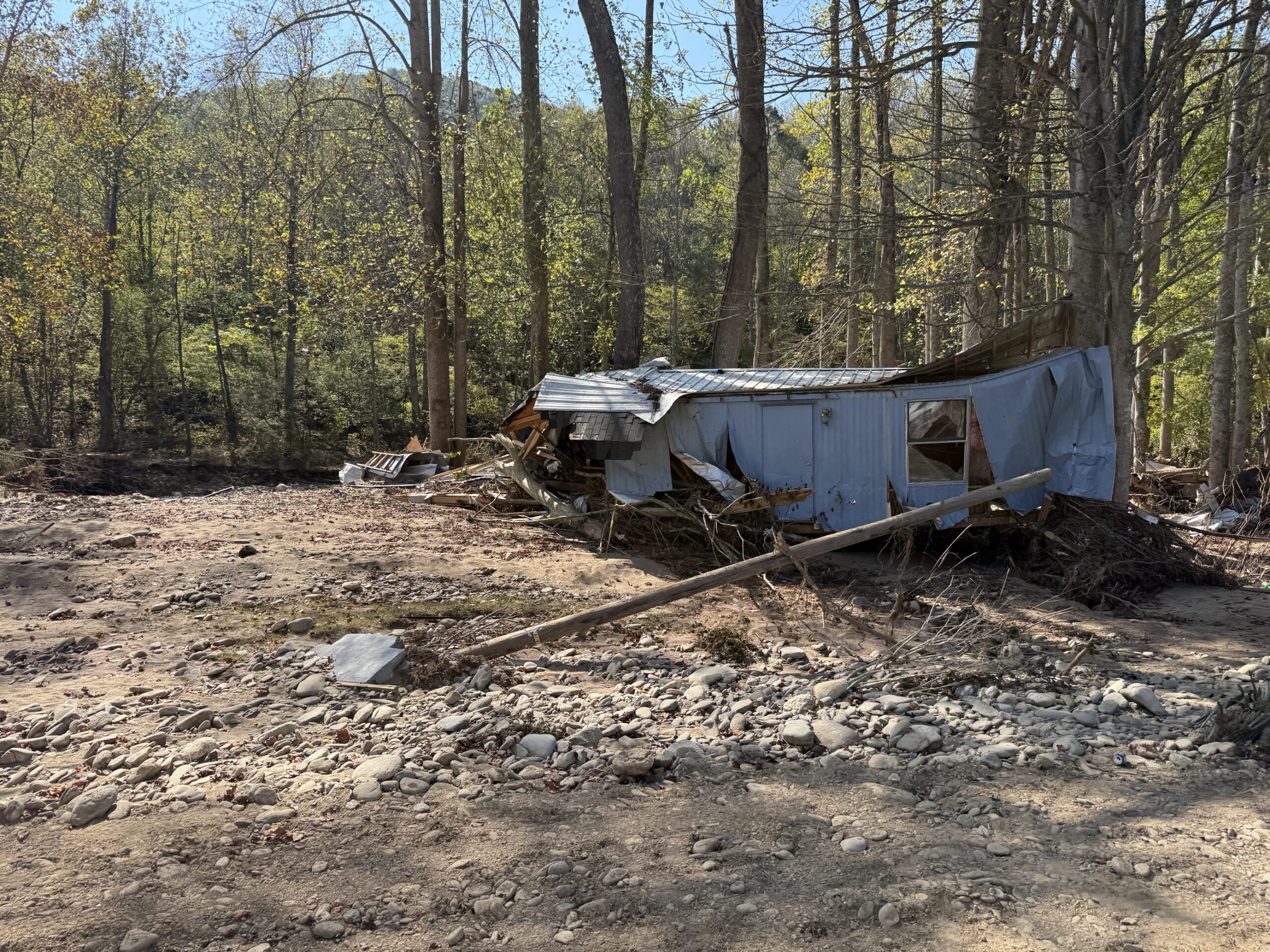
In the immediate aftermath of Hurricane Helene, residents across western North Carolina lost access to electricity as the large network of distribution lines served by Duke Energy and NC Electric Cooperatives were dismantled by more than 20 inches of rain. Examples of this could be seen all over the region immediately following the storm, with hillsides previously home to distribution poles completely washed away. This destruction of an intricate network of service lines built by utilities over decades of investment highlighted the vulnerabilities associated with a centralized distribution grid, leaving at-risk residents without access to power, cell service, and water for weeks with few other options.
However, in this initial recovery period, numerous private and public organizations came together to spearhead a model of recovery and resiliency that has already proved successful in places like Maui, Puerto Rico, New Orleans, and most recently Los Angeles.
As Helene barreled through the region, the team at nonprofit Footprint Project packed up their trailers in New Orleans knowing that western North Carolina was going to be in desperate need of support as soon as the skies cleared. The team arrived just two days later with multiple towable trailers equipped with solar modules, inverters, and backup battery systems, along with smaller mobile equipment that could be lent out to individuals and organizations in need. Once in the region, the Footprint Project team was able to quickly assess the scale and severity of Helene’s path of destruction, realizing this was considerably more devastating than most had anticipated. This recognition quickly warranted the forming of partnerships with local, state, and regional organizations to further expand the response efforts to better serve the significant needs of western North Carolinians. That’s when the partnership between the NC Sustainable Energy Association, Greentech Renewables, Land of Sky Regional Council, and Footprint Project began.
Early on, this group of organizations quickly linked up on late night calls to coordinate and understand the resources needed to expand access to solar and battery storage microgrids to restore power, clean drinking water, and telecommunications. Beyond the equipment already on hand through Footprint Project, the coalition began to fundraise for additional equipment purchases and coordinate equipment donations from manufacturers and solar installers throughout the state and country.
Within a month and a half of kicking off the fundraising and equipment donation campaign, the organizations raised more than $850,000 and secured pledges for more than $1.2 million of donated equipment. Greentech Renewables also committed to transporting equipment from warehouses throughout the Southeast as part of their efforts to support the recovery.
As time continued to progress during the essential recovery phase between October and November, the Footprint Project and Land of Sky Regional Council teams were able to successfully deploy more than 60 operational microgrid systems throughout western North Carolina.
Given the challenging nature of transportation immediately after Helene, Footprint coordinated with local emergency responders, the National Guard, and other nonprofits to deliver these systems via helicopter, truck, and off-road equipment. Placement of systems was determined based on word of mouth through emergency response operations and direct requests from the community. The systems served critical supply distribution centers, churches, assisted living facilities, vulnerable residents with medical devices, and fire stations — to name a few.
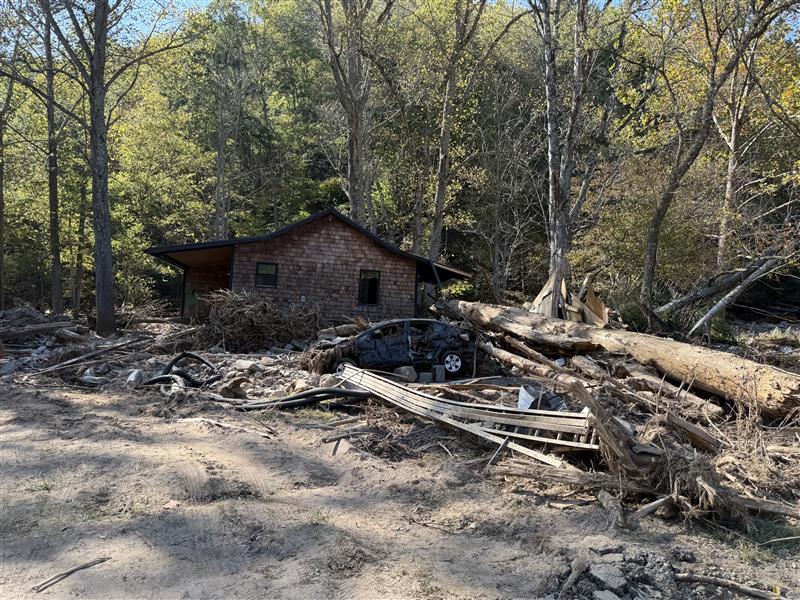
Big Ivy Community Center in Barnardsville, NC, is a particularly stark example of the immense benefit these microgrid systems could bring to communities in need. Barnardsville was especially hit hard by Helene, washing away all access roads, destroying a significant number of homes and mobile homes, and upending the lives of nearly all its residents. To aid in recovery, the Big Ivy Community Center served as a home base for aid assistance and supply distribution. Helicopters would travel in to drop supplies on a regular basis, allowing nearby residents to drive up and collect the basics, such as bottled water, toilet paper, canned goods, and other toiletries. This center was without access to power, making it difficult to communicate with response agencies, coordinate supply drops, and enable residents to connect with loved ones outside of the region.
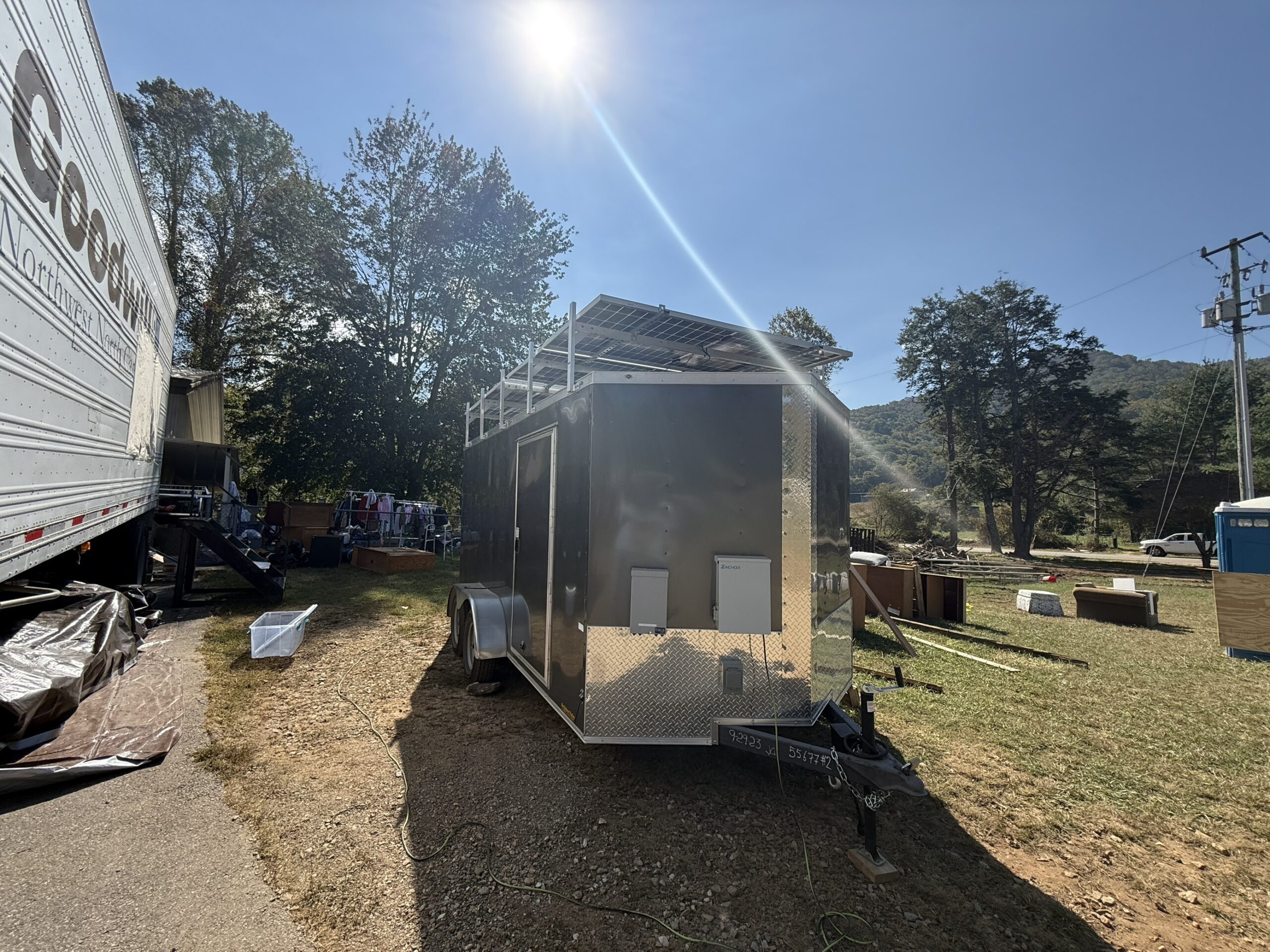
At this location, the Footprint Project team deployed a trailer solution (directly supported by Schneider Electric) with solar modules, inverter and batteries that enabled lighting for the community center, provided a source of power to charge cell phones, and powered a Starlink. The Starlink was immediately utilized by nearby residents to communicate with their families and to fill out FEMA applications online to receive financial aid.
The illustration below further demonstrates the types of equipment deployed at Big Ivy Community Center and elsewhere throughout the region.

Long-Term Resiliency
The story doesn’t end with the currently operating microgrids supporting residents and community organizations. Footprint Project has spearheaded a vision for direct community support, focused on enabling individuals and organizations to install their own solar and battery storage systems, utilizing equipment donated from manufacturers. This vision led to the creation of a Community Free Store (think Habitat Restore) where residents and organizations of WNC can request equipment like solar modules, inverters, and electrical components to install on their facilities.
Additionally, NCSEA, Land of Sky Regional Council, and Footprint Project are working with state partners to secure further investments in permanent microgrid facilities in both western and eastern North Carolina that would serve as ‘Community Resilience Hubs.’ These hubs would be located at nonprofit or local government buildings and would serve a large community of individuals in the aftermath of a storm or disaster. The facilities would be equipped with a commercial solar array, battery storage, atmospheric water generators (for clean drinking water), Starlinks, and other services of importance to local communities after a storm.
Facilities like these are imperative to serve as a safe place for community members to gather after a storm with access to power, clean drinking water, and telecommunications. Outside of storm response, the installed commercial PV systems can also be used to lower the utility bills of the host facility, enabling them to reallocate funds to other community services.
With this model, North Carolina can serve as an example for the rest of the country in natural disaster response and recovery, to better protect our communities all across the region as we continue to see more frequent and severe storms.
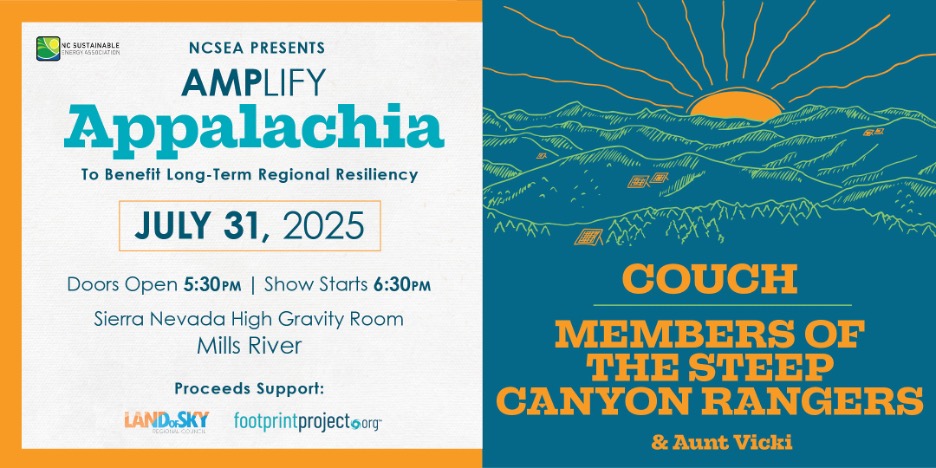
To help further support the deployment of solar and battery storage Microgrids throughout western North Carolina, NCSEA is hosting a relief concert on July 31 at Sierra Nevada Brewing Company near Asheville. This relief concert is open for all to attend and will be headlined by the bands Couch, Members of the Steep Canyon Rangers, and Aunt Vicki. Proceeds raised from this concert will go directly to support Footprint Project and Land of Sky Regional Council. More information and tickets can be found here.